Seven Passionate Pavans Eleonore Bürcher
Hopkinson Smith
DOWLAND
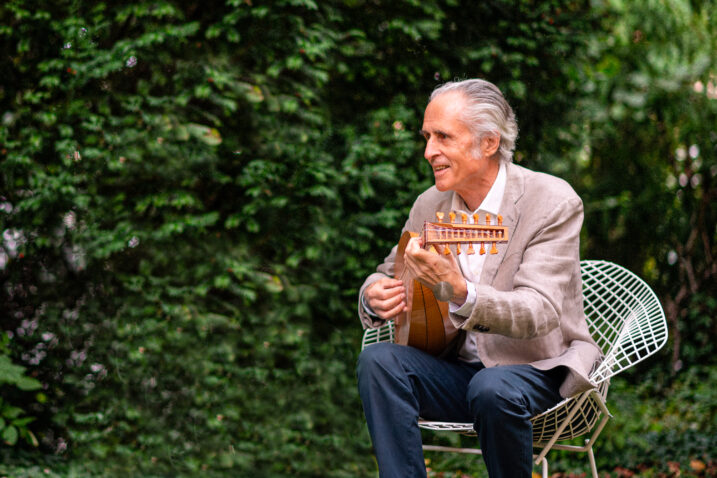

John Dowland’s Lachrimæ, or Seaven Teares figured in seaven passionate pavans is among the most impressive examples of pervasive melancholy in Renaissance music. The dissonances and unexpected harmonic twists are particularly unusual for their time, which is why Lachrimæ still exerts such a strong attraction today. The point of departure is the famous Lachrimæ motif from his song Flow, my tears, a descending melodic figure, a musical symbol of lamentation and weeping. Dowland uses it to unfold a rounded study of human grief that goes far beyond mere variations on a musical theme. He presents seven different emotional states: dignified, reserved (Lachrimæ Antiquæ / Old Tears), dense, expressive (Lachrimæ Antiquæ Novæ / Old Tears Renewed), plaintive, downcast (Lachrimæ Gementes / Sighing Tears), especially gloomy, resigned (Lachrimæ Tristes / Sad Tears), inwardly tense (Lachrimæ Coactæ /Forced Tears), warm (Lachrimæ Amantis / A Lover’s Tears), and calm, serene, almost transcendent (Lachrimæ Veræ / True Tears). Hopkinson Smith will be interpreting them in an arrangement for solo lute. Dowland’s music, which combines complex polyphony with a haunting, melancholy beauty, will also be translated into our time with texts from the 20th and 21st centuries.
Eleonore Bürcher – reading
Hopkinson Smith – lute
Programm:
DOWLAND Lachrimæ

